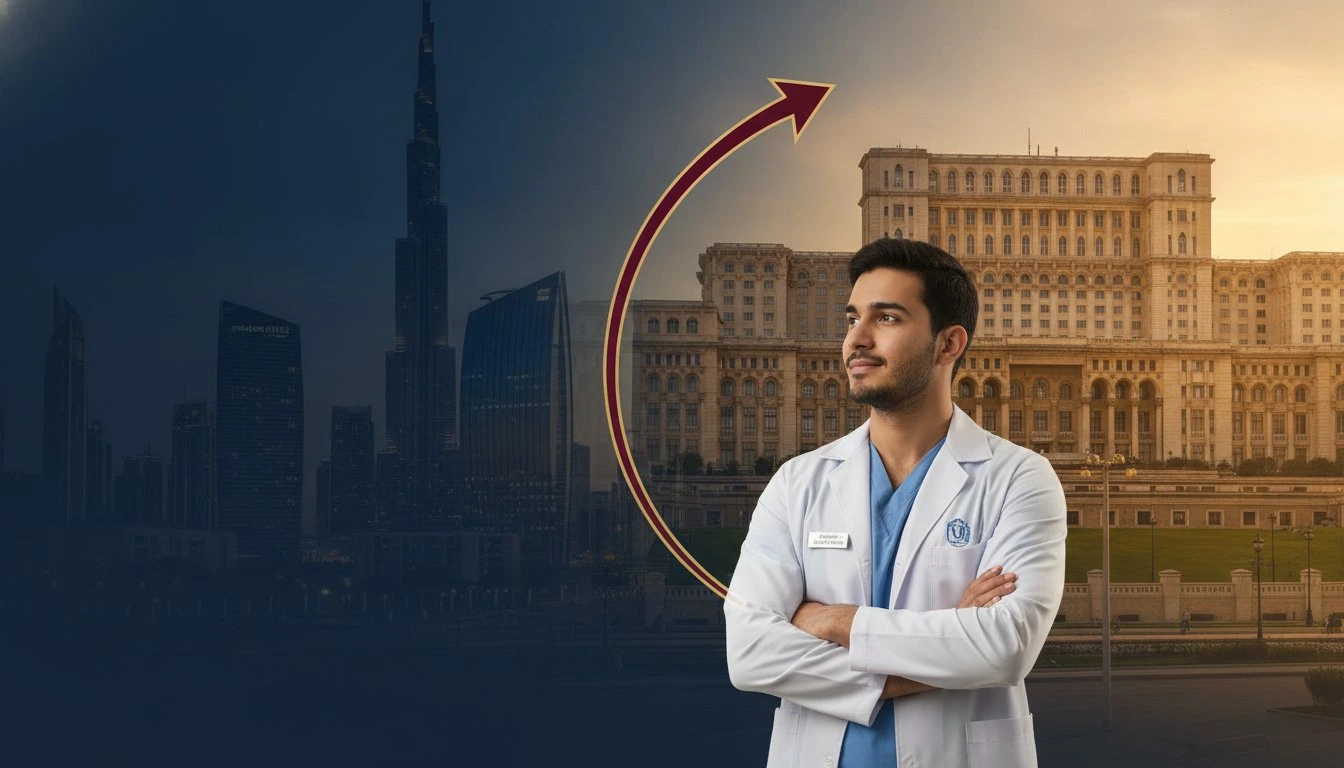
Receiving your acceptance letter from a prestigious medical university is a triumph, but it's only half the battle won. The real gatekeeper between your current life and your future as a physician is the D/SD long-stay visa. We know that deciphering the specific romania student visa requirements for medical students can feel like navigating a maze of confusing jargon and high-stakes bureaucracy. It's natural to worry about missing a critical document or feeling unprepared for the embassy interview when your entire career path is on the line.
You deserve a clear path to your destination. This guide empowers you to master the complete documentation process with confidence and precision, ensuring you meet every regulatory standard for 2026. We'll break down the €120 application fee, clarify the €3,000 financial solvency requirement, and provide a chronological checklist for your journey. From your initial submission to securing your residency permit within 30 days of arrival, we're here to ensure your transition from applicant to medical student is seamless and successful.
Securing your place in a medical program is a significant personal evolution, but the transition to campus requires a precise understanding of the D/SD visa framework. The Long-Stay Visa for Study (D/SD) is the specific legal instrument that allows non-EU citizens to enter Romania for extended academic pursuits. It functions as more than just an entry permit; it acts as the foundation for your legal residency within the Romanian education system. Without this specific classification, you cannot complete your enrollment or remain in the country for the duration of your six-year medical degree.
Timing is your most valuable asset. While the academic year begins in late September, the journey starts much earlier. Many top-tier institutions, such as Iuliu Hațieganu University, open their application portals as early as March. You should aim to have your university acceptance and Ministry clearance finalized by July. This window accounts for the 2-4 week visa processing time and ensures you arrive on campus with ample time to settle before the first lecture. Understanding the romania student visa requirements for medical students begins with recognizing that the visa is the real gatekeeper to your medical career.
Distinguishing between visa types is critical to avoid costly administrative errors. A C-type short-stay visa is entirely insufficient for medical students; it limits your stay to 90 days and offers no path to residency. In contrast, the D/SD visa grants you the right to live in Romania and work part-time for up to four hours per day. This legal status is essential for your long-term success. Once you arrive, this visa provides the basis for your mandatory temporary residence permit, which you must renew annually throughout your studies.
A common pitfall for applicants is confusing a university's offer with the official Ministry clearance. While a university may want to admit you, the Romanian Ministry of Education must vet your academic credentials first. This vetting process can take several weeks and results in the issuance of a formal Letter of Acceptance. The Letter of Acceptance issued by the Ministry of Education serves as the primary legal prerequisite for the D/SD visa. You cannot book your embassy appointment or satisfy the romania student visa requirements for medical students without this original document in hand. It serves as the ultimate proof that you are authorized to study medicine at a national level.
Precision in your documentation is the bridge between your ambition and your reality on campus. The romania student visa requirements for medical students demand a meticulous approach; even a minor oversight can lead to processing delays that jeopardize your September start date. Your passport serves as the foundation of your file. It must have at least two blank pages for the visa sticker and remain valid for at least six months beyond your intended stay. Don't overlook the technicality of your photographs; you need two recent 3x4 cm color photos against a plain white background to meet official standards.
The core of your application is the original Ministry of Education Letter of Acceptance. As established in our framework discussion, this document is irreplaceable. Alongside it, you must provide proof that you've paid your tuition fees for at least the first academic year. This usually takes the form of a bank transfer confirmation from the university. Finally, you must include a criminal record certificate or equivalent document from your country of residence. This document proves your legal standing and is a mandatory safety clearance for all international medical students entering the country.
Your academic credentials require more than just a simple photocopy. Most Romanian consulates require your high school diplomas and transcripts to bear an Apostille or be legalized by the Ministry of Foreign Affairs in your home country. This process verifies the authenticity of your education for international use. Additionally, your birth certificate must be translated into Romanian and notarized. If you're enrolling in an English or French medical stream, ensure your language proficiency certificate is included in your packet to avoid questions about your ability to follow the curriculum. If these administrative steps feel daunting, consulting with a professional MBBS abroad consultancy can help you organize these records with total accuracy.
The digital phase of your application occurs through the Romanian E-Visa portal. Accuracy here is paramount. Common errors, such as misspelling your name as it appears in your passport or entering incorrect university dates, often trigger immediate rejections. Ensure every field matches your physical documents exactly. For the 2026 academic cycle, the consular fee for a long-stay D/SD visa is €120. Most consulates require this payment via bank transfer or in cash at the time of your appointment. Keep your receipt safe; it's a vital part of your submission package that confirms your application is active and ready for review.
Establishing financial stability is a critical pillar of your application. While academic merit earns you the seat, your ability to sustain yourself throughout the program is what secures the visa. For the 2026 academic year, the Romanian government requires medical students to demonstrate proof of financial means. The verified minimum amount for this solvency check is €3,000. This figure ensures you can cover initial living costs, which typically range between €300 and €700 per month depending on your city. Mastering this part of the romania student visa requirements for medical students demonstrates to the consulate that you are a well-prepared candidate ready for the rigors of international study.
It's vital to remember that these numbers aren't just bureaucratic hurdles; they're safeguards for your personal evolution. Proving you have the means to thrive in a new country allows you to focus entirely on your medical training rather than financial stress. Whether you're using personal savings, scholarship letters, or family support, clarity in your presentation is your greatest tool for success. Consuls prioritize applications that show a stable, long-term financial foundation over those with sudden, unexplained deposits.
Consular officers look for consistency and transparency in your financial records. If you're providing bank statements, they must reflect the last six months of transaction history. This window allows the embassy to verify that the funds are stable rather than a one-time deposit made just for the application. For clarity, ensure your statements are presented in EUR or USD, as this simplifies the review process for the visa officer. If you don't have a personal income, you can rely on a notarized sponsorship letter from a parent or guardian. This legal document must be accompanied by the sponsor's own bank statements and proof of income, creating a clear chain of financial responsibility that satisfies the D/SD visa criteria. If you're unsure how to draft a legally binding sponsorship letter, seeking a pre-departure briefing can clarify these administrative nuances.
Protecting your well-being is a mandatory legal requirement for entry into the Schengen Area. You must obtain medical insurance that provides a minimum coverage of €30,000 and is valid for the entire duration of your initial visa. This policy must cover emergency medical expenses and repatriation for health reasons. While many students start with private international insurance, you'll transition to the Romanian National Health Insurance (CNAS) once you receive your residency permit. This transition is a key step in your long-term success, as it grants you access to the local healthcare infrastructure at a student rate. Secure your policy early to avoid last-minute hurdles during your portal submission and ensure you meet the romania student visa requirements for medical students with total precision.
Once you submit your application through the Romanian E-Visa portal, the focus shifts from paperwork to personal presentation. The interview is a pivotal moment where you must demonstrate that you aren't just meeting the romania student visa requirements for medical students, but that you're a committed future professional. This meeting is your opportunity to build trust with the consular officer and confirm your authentic academic intent. Prepare to discuss your financial arrangements and your plans for residency once you arrive in Romania with clarity and seasoned confidence.
Consuls look for candidates who are visionary yet practical. They want to see that you've considered the logistical realities of moving abroad and that you're prepared for the high-stakes environment of a medical degree. Your goal is to project the image of a well-organized student who has already mastered the administrative hurdles and is now ready to focus on their education. This interaction is the final gatekeeper in your home country before you begin your journey to Europe.
Success in the interview requires more than just honesty; it requires a clear, compelling narrative. Consular officers often ask why you chose Romania over other European destinations. Be ready to discuss the specific reputation of your chosen university and the unique aspects of its medical curriculum. If you're attending Iuliu Hațieganu in Cluj-Napoca, for instance, mention their focus on early clinical exposure. You can utilize our expert visa interview preparation resources to refine your responses and project a voice of reliability. For personalized coaching that targets these specific medical niches, our team at Ideal Study Abroad offers specialized visa interview preparation to ensure you're ready for any scenario.
Your journey doesn't end when the visa is stamped in your passport. Upon landing at Henri Coandă International Airport or other regional hubs, you'll encounter the Romanian Border Police. You must carry an "Arrival Pack" in your hand luggage that includes your original Ministry Letter of Acceptance, proof of tuition payment, and your health insurance certificate. You must carry original documents, rather than just digital copies, during transit to ensure a smooth entry through passport control. Additionally, have your proof of accommodation ready, whether it's a university dormitory certificate or a notarized rental contract. This preparation ensures your first steps into the Schengen Area are as professional as your application and fully compliant with the romania student visa requirements for medical students. Remember, you have exactly 30 days from arrival to register with the General Inspectorate for Immigration to secure your residency permit.
Your arrival in Romania marks the beginning of a significant personal evolution, but your legal journey isn't finished once you clear passport control. The D/SD long-stay visa is essentially an entry permit that grants you an initial window of legal stay. To remain in the country for the full duration of your six-year degree, you must convert this visa into a temporary residence permit. This transition is a mandatory step for all non-EU citizens and serves as your official identity document while living abroad. Explore our comprehensive guide to studying medicine in Romania for campus life tips and deeper insights into your new academic home.
The most critical deadline you face is the 30-day rule. You're required to register with the General Inspectorate for Immigration (IGI) within one month of your arrival on Romanian soil. Failing to meet this timeline can result in administrative fines or even the cancellation of your legal status. Fulfilling the post-arrival romania student visa requirements for medical students requires a final round of documentation that proves you've moved from an applicant to a fully registered member of your university's medical faculty. This phase turns your acceptance into a long-term legal reality.
The IGI office requires a specific set of documents to issue your residency card. You'll need to undergo a local medical check-up at a certified clinic to prove you're in good health and don't carry contagious diseases. Additionally, you must provide your original university registration certificate, proof of tuition payment, and a notarized lease agreement or dormitory certificate. The permit is typically valid for one year and requires annual renewal. Maintaining your legal status is a steady, chronological process that lasts throughout your entire medical education. We recommend keeping a digital folder of all your IGI submissions to make each yearly renewal as seamless as possible.
Navigating these high-stakes international processes is far less daunting when you have an experienced global mentor by your side. We specialize in medical placements for MBBS and Dentistry across Romania, bridging the gap between your current location and your future medical career. Our pre-departure briefings prepare you for every administrative shift you'll encounter, ensuring you're ready for everything from the IGI registration to cultural adaptation. We provide professional guidance from your initial application through to your arrival on campus, ensuring you never walk this path alone. Our commitment is to your long-term success, helping you manage the logistical realities so you can focus on your studies. Ready to start your medical career? Contact Ideal Study Abroad for expert admission and visa support and take the first step toward your future with seasoned confidence.
Securing your seat in a medical faculty is a monumental achievement, but the administrative journey defines your success. By mastering the romania student visa requirements for medical students, you transform a complex bureaucratic process into a manageable path toward your degree. Remember that your Ministry Letter of Acceptance and the €3,000 financial solvency proof are the keys to your entry; while the 30-day residency registration at the IGI office ensures your long-term legal standing in Europe.
You don't have to navigate these high-stakes requirements alone. As a specialized medical school consultancy with over 20 years of international placement experience, we provide the seasoned wisdom you need to succeed. Our support includes expert visa interview coaching and comprehensive pre-departure briefings to ensure your transition is seamless. Secure your medical future in Romania with Ideal Study Abroad and move forward with the confidence of a well-prepared professional. Your evolution into a global physician starts with a single, precise step.
The typical processing time for the D/SD visa is 2-4 weeks once your application is submitted at the consulate. You should account for the entire journey from university acceptance to visa issuance, which often takes 2-3 months. Starting your application early in the year ensures you meet all romania student visa requirements for medical students without the stress of last-minute delays.
No, you cannot initiate the visa application without the official Letter of Acceptance from the Romanian Ministry of Education. This document is the primary legal prerequisite for the D/SD visa category. Consular officers won't accept your file until you present the original letter; it serves as the official state vetting of your academic eligibility.
Applicants must demonstrate a minimum financial solvency of €3,000 for the 2026 academic cycle. This amount proves you can cover your initial living costs, which typically range between €300 and €700 per month. Presenting a stable six-month bank statement or a notarized sponsorship letter is the most effective way to satisfy this specific requirement during your interview.
You don't need to speak Romanian if your chosen medical program is taught entirely in English or French. However, you must provide a recognized language proficiency certificate to prove you can follow the complex medical curriculum. While learning basic Romanian phrases is helpful for daily life, it isn't a formal part of the romania student visa requirements for medical students in these international streams.
A medical exam isn't typically required for the initial visa application at most consulates, but it's a mandatory step for your residency permit once you arrive. You must visit a certified local clinic in Romania for a health check-up. This medical clearance is essential for your registration with the General Inspectorate for Immigration within your first 30 days in the country.
Yes, a visa can still be rejected despite having a Ministry Letter of Acceptance. Common reasons for rejection include insufficient financial proof, a criminal record, or a poor performance during the embassy interview. The Letter of Acceptance only confirms your academic eligibility; the visa process evaluates your personal, legal, and financial stability as a prospective resident.
The application fee for a long-stay visa for studies (D/SD) is €120 for the 2026 academic year. This fee is generally paid in cash or via bank transfer at the time of your consular appointment. It's important to keep your payment receipt safe, as you'll need to include it in your document packet for the visa officer's review.
You must apply for your temporary residence permit at the General Inspectorate for Immigration (IGI) within 30 days of entering Romania. Your D/SD visa is an entry document that allows you to start this residency process. As long as you submit your residency application before the visa expires, your stay remains legal while the IGI processes your long-term permit.

Feel free to contact with us if you have any questions with us!
Copyright © 2026 Best Education Consultancy in UAE & Nepal All Rights Reserved.


