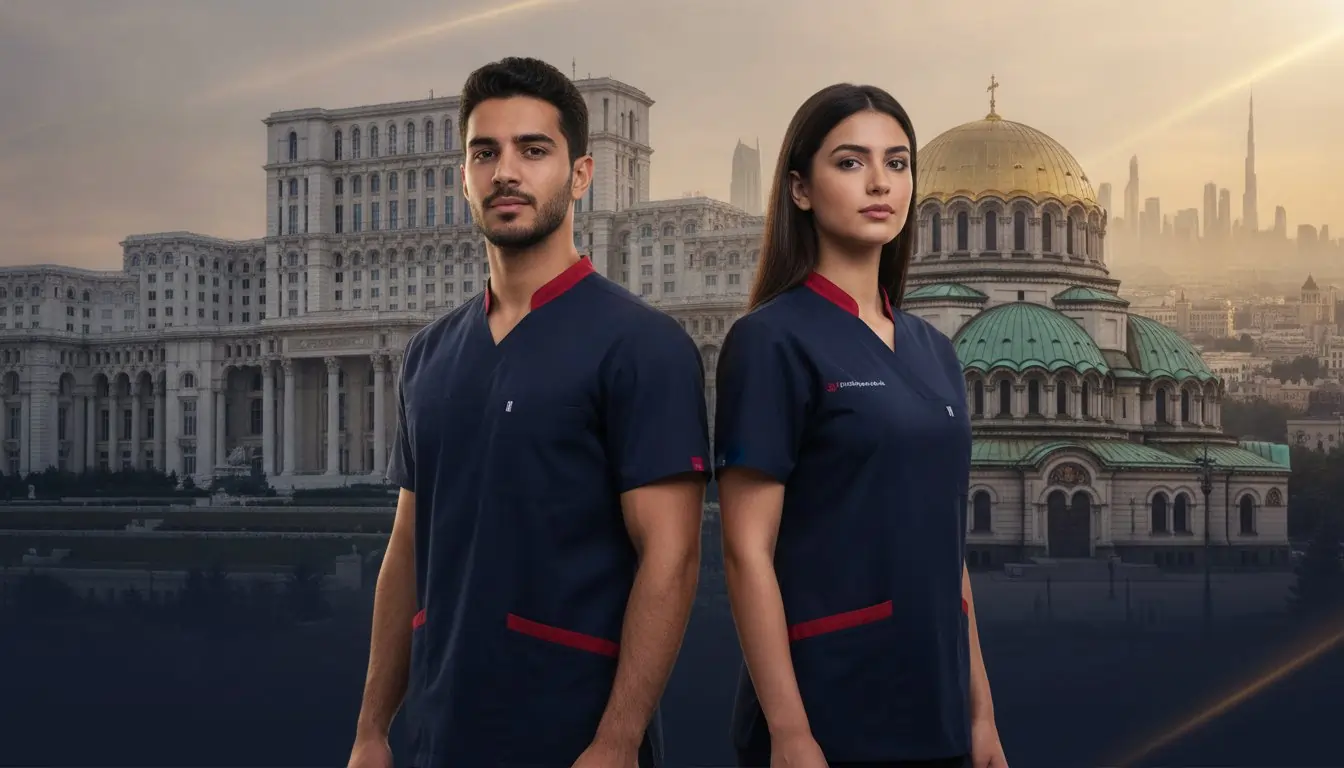
Did you know that Romania
currently produces 9.9 dental graduates for every 100,000 inhabitants, the
highest rate in the entire European Union? This statistic isn't just a number.
It's a clear signal of a sophisticated educational hub that's drawing thousands
of international students to the Balkans. When weighing the options for dentistry in romania vs bulgaria,
it's natural to feel overwhelmed by conflicting information about entrance
exams and global recognition. Choosing where to invest the next six years of
your life is a monumental decision, and you deserve a path that's both
transparent and secure.
We understand that the
journey to a medical career should be a personal evolution, not a logistical
nightmare. This guide provides a definitive comparison for the 2026 academic
year. You'll discover the critical differences in tuition fees, which range from
€7,500 to €10,000, and learn which universities have replaced traditional exams
with academic file evaluations. We'll preview the exact 2026 admission
timelines and global recognition standards to ensure you make a choice that
secures your professional future with absolute confidence.
Choosing where to study is
about more than just a degree; it's about the quality of the foundation you
build for your future practice. In 2026, the debate regarding dentistry in romania vs bulgaria
has become a central focus for aspiring dentists worldwide. Both nations offer
a rigorous 6-year academic structure that culminates in the prestigious Doctor
of Dental Medicine (DMD) degree. This qualification isn't just a local
credential. Because of the EU's
Directive on Professional Qualifications, your degree from a Romanian or
Bulgarian institution is recognized across all European Union member states.
This legal framework ensures that the training you receive meets strict,
harmonized standards, allowing for seamless professional mobility. The journey
is divided into three years of pre-clinical theory and three years of intensive
clinical practice, ensuring you graduate as a fully capable practitioner.
The academic environment in
Eastern Europe has transformed significantly over the last decade. Gone are the
days of outdated facilities. Today, university hubs like Sofia, Bucharest, and
Cluj-Napoca house high-tech dental clinics equipped with intraoral scanners and
3D imaging. This modernization has fostered vibrant international student
communities, making these cities some of the most diverse academic environments
in Europe. We recommend applying in 2026 because admission competitiveness is
increasing. As more students realize the value of these degrees, the entry
requirements and tuition rates are expected to tighten. Securing your spot now
means benefiting from current accessibility while the infrastructure is at its
peak. It's a strategic move for any student who views their education as a
long-term investment in their professional identity.
English-taught programs in
these countries are specifically designed to align with global standards. While
the curriculum is delivered in English to help you prepare for international
board exams, you'll also learn the local language to interact with patients
during clinical rotations. This dual approach is vital. It provides the
theoretical depth needed for exams and the practical empathy required for
chairside care. Small group sizes ensure you receive personalized clinical
supervision from experienced professors who act as mentors. This hands-on focus
is a significant advantage when comparing dentistry in romania vs bulgaria, as both
countries prioritize early patient contact. You won't just be watching; you'll
be doing. This practical immersion, combined with living costs that remain
significantly lower than in Western Europe, makes the region an unbeatable
choice for the next generation of dental professionals. Your dental career is a
personal evolution, and these programs provide the perfect environment for that
growth.
When analyzing dentistry in romania vs bulgaria,
the most significant factor for your future career is the balance between
academic rigor and hands-on patient care. Both countries strictly adhere to the
EU
Directive 2005/36/EC on professional qualifications, which mandates a
minimum of 5,000 hours of theoretical and practical training over six years.
However, the pedagogical approach differs slightly between the two nations.
Romanian universities often emphasize a deep theoretical foundation during the
pre-clinical years, while Bulgarian institutions frequently introduce clinical
observation earlier in the program. This ensures that by the time you reach
your final rotations in 2026, you're not just reading about procedures; you're
performing them under the guidance of faculty members who often hold dual
certifications from Western European or US institutions.
Modernity is no longer a
luxury but a standard in these regions. You'll find that university clinics in
both countries have invested heavily in intraoral scanners, 3D imaging, and
high-fidelity simulation labs. These facilities allow you to master complex
movements in a controlled environment before transitioning to live patient
care. Because these universities run their own public clinics,
student-to-patient ratios remain impressively high, providing you with a volume
of real-world experience that is often difficult to find in more expensive
Western programs.
Romania has established a
formidable reputation for its training in maxillofacial surgery and complex
restorative work. Universities like Iuliu Hațieganu in Cluj-Napoca have
integrated digital dentistry directly into the core curriculum, ensuring
graduates are ready for the tech-driven clinics of the future. The Romanian
dental curriculum is specifically engineered to produce graduates who possess
exceptional surgical proficiency and independent diagnostic autonomy. This
focus is a primary reason why the country maintains the EU's highest rate of
dental graduates, at 9.9 per 100,000 inhabitants.
Bulgarian dental schools,
particularly in Sofia and Plovdiv, are renowned for their focus on aesthetic
dentistry and modern orthodontics. The 'Sofia Method' of clinical training is a
distinct philosophy that prioritizes early patient interaction, helping you
develop a professional chairside manner alongside your technical skills. In
Plovdiv, the simulation labs have seen massive upgrades, offering some of the
best prosthetic training facilities in the Balkans. These labs allow you to
master intricate techniques on high-fidelity manikins before you begin treating
patients in the university's busy urban clinics.
Identifying which clinical
focus aligns with your career goals is a vital step in your journey. You can consult with our experienced mentors to
evaluate which university's specific strengths and faculty expertise will best
support your long-term professional vision.
Managing the financial and
administrative aspects of your education is just as critical as the clinical
training itself. When you evaluate dentistry
in romania vs bulgaria for the 2026 intake, you'll notice a
distinct difference in the financial commitment required. Romania currently
offers the most competitive tuition rates in the region. For instance, the
Iuliu Hațieganu University in Cluj-Napoca and the University of Medicine and
Pharmacy of Craiova have set their 2026 tuition fees at approximately €7,500
per year. In contrast, Bulgarian institutions represent a higher tier of
investment; the Medical University of Sofia requires €10,000 annually, while
Plovdiv Medical University stands at €9,000. Both countries maintain a similar
cost of living, with students typically needing between €500 and €800 per month
to cover high-quality accommodation, food, and local transport.
Your budget must account for
more than just the headline tuition figure. We advise students to prepare for
secondary costs such as registration fees, which at the Medical University of
Sofia include €51 for document submission and €205 for the entrance exam. You
should also set aside funds for specialized clinical equipment and textbooks,
which can add €300 to €500 to your initial annual expenses. While direct
scholarships for international students are limited, some universities offer
merit-based financial aid or tuition reductions for students who maintain
exceptional academic records during their first two years of study. This makes
early academic focus a practical financial strategy.
The path to entry varies
significantly between the two nations, impacting how you should prepare in the
coming months. Romania has largely moved toward a file-based admission process.
Universities like Craiova and Cluj evaluate your high school performance,
specifically your grades in Biology and Chemistry, alongside personal
achievements rather than a traditional exam. This is an excellent route for
students with strong academic backgrounds who prefer to avoid the pressure of a
single high-stakes test.
Bulgaria maintains a more traditional, exam-centric approach. For the 2026 session, the Medical University of Sofia has scheduled its in-person entrance exam for September 3, covering Biology, Chemistry, and English proficiency. Plovdiv offers more flexibility with online entrance exam sessions held between April and September. To succeed, you must demonstrate a mastery of secondary school science and a clear motivation for the dental profession during the interview stages. We recommend starting your document preparation by May to meet the Romanian deadlines in July or the Bulgarian submission window that typically closes in late August.

Securing your degree is a
monumental milestone, but its true value lies in its portability across
international borders. When comparing dentistry
in romania vs bulgaria, you aren't just choosing a study
location; you're selecting a credential that must stand up to rigorous global
scrutiny. Degrees from both nations are fully compliant with the EU Directive
2005/36/EC, which simplifies the process of registering as a dentist in any
European Union member state. For those looking further afield, these qualifications
provide a solid foundation for the UK's General Dental Council (GDC)
registration or the National Board Dental Examination (NBDE) in the United
States. While additional exams are often required for non-EU practice, the
ECTS-based curriculum you'll follow ensures your educational hours meet the
high standards expected by international medical boards.
Verification is a critical
step in this transition. Most international health authorities, including those
in the UK and Middle East, utilize bodies like Dataflow to verify the
authenticity of your academic documents and clinical hours. Because Romanian and
Bulgarian universities are well-established within these global databases, the
primary source verification process is typically efficient. This transparency
reduces the administrative anxiety often associated with moving your career to
a new country after graduation.
For students from the Gulf
region, returning home to practice is often the ultimate goal. The UAE Ministry
of Education recognizes many top-tier dental schools in both Romania and
Bulgaria, though it's vital to check the current accredited list for 2026 before
you apply. To obtain a license from the Dubai Health Authority (DHA) or the
Ministry of Health (MOH), you'll need to undergo a comprehensive evaluation of
your university's accreditation and your specific clinical experience.
EU-standard dental degrees are highly valued in the UAE healthcare sector
because they represent a rigorous compliance with international clinical
protocols and patient safety standards. You'll likely need to complete a period
of supervised practice or pass a local licensing exam, but your European
training provides the competitive edge needed to succeed in these high-stakes
environments.
Your education doesn't have
to end with a DMD. Many graduates choose to pursue Master's or PhD programs in
Western Europe, leveraging their EU degree to gain entry into specialized
fields like oral surgery or orthodontics. Both Romania and Bulgaria also offer
residency options for international graduates, allowing you to specialize while
remaining in a familiar academic environment. This continuity can be a
significant advantage for your professional development. To ensure you're on
the right path from day one, contact
Ideal Study Abroad for expert guidance on selecting a university that
aligns with the specific licensing requirements of your home country.
Deciding to pursue a medical
career is a life-altering milestone that requires more than just academic
ambition. It demands a dedicated partner who understands the high-stakes nature
of international admissions. Choosing between dentistry in romania vs bulgaria is a
significant first step, but the administrative hurdles that follow require a
meticulous approach to ensure your seat is secured for the 2026 intake. We
provide seasoned wisdom and a steady hand to help you navigate these complex
bureaucratic waters, transforming a daunting process into a manageable,
sequential journey toward your professional evolution.
Timing is everything when
applying to top-tier dental schools. For the October 2026 intake, you should
begin your preparation no later than March. Romanian universities, such as
Iuliu Hațieganu, typically open their application windows from early May through
July 30. If your focus is on Bulgaria, the Medical University of Sofia accepts
documents between July 27 and August 31. This narrow window leaves little room
for error. You'll need a comprehensive document checklist that includes
legalized high school diplomas, medical certificates, and official translations
authenticated by the relevant ministries.
The documentation phase is
often where students face the most anxiety. Requirements for apostille and
specific legalisation formats can vary between Sofia and Bucharest. We manage
these technicalities on your behalf, ensuring every file meets the strict institutional
standards of your chosen university. Once your application is submitted, we
pivot to preparing you for the next stage of the journey. You can access our
specialized resources on visa
interview preparation to gain the confidence needed for a successful
embassy appointment.
Navigating these
bureaucracies alone often leads to common pitfalls, such as missing subtle
changes in entrance exam patterns or submitting incorrectly formatted
translations. Our role as an experienced global mentor is to provide you with
exclusive insights into university-specific requirements that aren't always
visible on public portals. Whether it's understanding the nuances of the
Plovdiv online exam or the file-based evaluation in Craiova, our expertise
ensures your academic profile is presented in the best possible light to
admission committees.
Our commitment doesn't end
with an acceptance letter. We provide comprehensive pre-departure briefings and
on-ground support to help you transition smoothly into your new life in Eastern
Europe. From finding reliable accommodation to navigating local registration,
we stand by you as a dedicated partner. Secure your future and take the first
step toward a successful career by choosing our undergraduate admission assistance
today. We're here to ensure that your dream of studying dentistry in romania vs bulgaria
becomes a tangible, successful reality.
Choosing between dentistry in romania vs bulgaria
is a pivotal decision that defines your professional trajectory. Romania
remains a premier choice for those seeking competitive tuition and file-based
admission processes. Bulgaria offers a traditional, high-stakes environment
focused on clinical excellence and early patient interaction. Both nations
provide a gateway to a prestigious DMD degree, fully compliant with EU
standards and recognized internationally from the UK to the UAE. Your path to a
successful medical career should be a journey of personal growth, supported by
experts who understand the logistical realities of international transitions.
Ideal Study Abroad brings
over 20 years of experience to your application process. We offer specialized
placement services, comprehensive visa interview preparation, and dedicated
pre-departure support to ensure you arrive ready for success. Don't leave your
ambitions to chance. Start your 2026
dentistry application with Ideal Study Abroad today and take the first step
toward your global dental career. Your evolution into a world-class
practitioner begins here.
Both countries are equally
viable options because their degrees comply with EU standards, which the UK's
General Dental Council (GDC) currently recognizes for registration. Whether you
choose dentistry in
romania vs bulgaria, you'll graduate with a qualification that
meets the clinical hour requirements necessary for international practice. The
choice depends more on your preferred study environment and budget than on any
difference in recognition levels within the UK.
You don't need to be fluent
to start your studies since the core curriculum is delivered entirely in
English. However, you'll attend mandatory language classes during the first
three years to prepare for clinical rotations. By the time you start treating
patients in year four, you'll need basic conversational skills in Romanian or
Bulgarian to ensure effective communication and patient safety during chairside
care.
Romania generally offers a
more accessible entry route because several top universities use a file-based
evaluation instead of a traditional entrance exam. In contrast, Bulgarian
institutions like Sofia Medical University require a competitive, in-person
exam in Biology and Chemistry. If you prefer to be assessed on your high school
academic record and personal achievements rather than a single test, Romania is
likely the better fit for your 2026 application.
Transfers between dental
schools in Bulgaria and Romania are possible through the European Credit
Transfer and Accumulation System (ECTS). You'll need to provide a full
transcript of your completed modules to the target university for a credit
compatibility review. Most transfers are successful if the curricula align
closely, though you might be required to take difference exams to cover any
missing subjects from the previous years.
Living costs are remarkably
similar in both countries, typically ranging from €500 to €800 per month for a
comfortable student lifestyle. This budget covers private accommodation,
groceries, and local transport in major cities like Bucharest, Sofia, or Cluj-Napoca.
While tuition for dentistry
in romania vs bulgaria differs, your daily expenses will remain
relatively consistent regardless of which side of the border you choose to call
home.
Yes, degrees from both
countries are recognized in the UAE, but the process involves a detailed
evaluation by the Dubai Health Authority (DHA) or the Ministry of Health (MOH).
You'll need to verify your credentials through Dataflow and ensure your specific
university is on the UAE's approved list for 2026. While the recognition isn't
automatic, the EU-standard curriculum provides a strong foundation for passing
the required licensing examinations.
For the 2026 intake, the
Medical University of Sofia has set its application window from July 27 to
August 31. Plovdiv Medical University offers more flexibility with multiple
entrance exam sessions scheduled between April and September 2026. We recommend
starting your document preparation by May to ensure all translations and
legalizations are completed well before these final submission dates to avoid
any last minute delays.
There is no official upper
age limit for international students applying to dental schools in Romania or
Bulgaria. Universities prioritize your academic qualifications in Biology and
Chemistry and your overall motivation for the profession. As long as you
possess a valid high school diploma or equivalent that meets the science
requirements, you can pursue your dental education at any stage of your
personal or professional life.

Feel free to contact with us if you have any questions with us!
Copyright © 2026 Best Education Consultancy in UAE & Nepal All Rights Reserved.


